Latest blogs
What popular books are written in Hindi language?
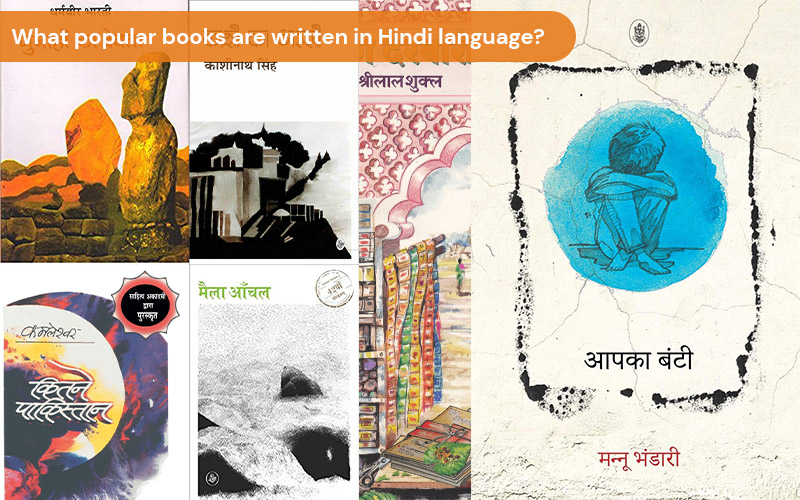
Hindi literature is opulent in varieties and nuanced in tradition. Literature places itself on the face of a linguistic journey. If you haven’t undertaken that journey yet, this is the time you should totally emerge yourself in learning Hindi through literature.Hindi literature has all kinds of stories containing a very rich literary heritage. Read through the list of the most popular literary works in Hindi, which you must read.1. Gunaho Ka Devta by Dharamvir BharatiGunaho Ka Devta is a romantic story that centres around a student, Chander, who falls in love with Sudha, the daughter of his college professor Dr. Shukla. This story mostly focuses on caste discrimination in the society. The in-depth description of love, anguish and indecision makes the booa literary piece. There is a television adaptation of the book titled Ek Tha Chander Ek Thi Sudha which was featured on Life OK.2. Kitne Pakistan by KamleshwarKitne Pakistan is a compulsory read if your interest lies highly on partitions around the world. The novel brings allegory into realism. In the book, different historical characters like Aurangzeb, Babur, Saddam Hussein, and Adolf Hitler are put together in a fictional court and implored to narrate their understanding of history. Kitne Pakistan was awarded the 2003 Sahitya Akademi Award for Hindi literature.3. Kashi Ka Assi by Kashinath SinghKashi Ka Assi comprises five stories on the backdrop of the Assi ghat in Varanasi. These stories refer to the social and political system of the 1990s, but they are also relevant from today’s perspective. The flow and proficient language of this book supplements the hardness of the stories. A bollywood film Mohalla Assi was based on this novel.4. Maila Aanchal by Phanishwar Nath ‘Renu’Maila Aanchal is one of the most imperative novels ever written in Hindi literature. It also serves as an example of Anchalik Upanyas (regional novel) in Hindi. The story is of a young doctor who chooses a remote village as his work field after he completed his education. Here he experiences the outdatedness of village life, ignorance, sorrow and superstition. The story concludes with the buoyant conviction that the village-consciousness had awakened.5. Aapka Bunti by Mannu BhandariAapka Bunti is the story of a nine-year-old Bunty, who is coping with the divorce of his parents. The book gives a mourning narrative of how a small child struggles against things that are incomprehensive from his limited mindset.6. Rag Darbari by Shrilal ShuklaIf you are an admirer of a satire, choose Rag Darbari. It is a novel that bites hard on the lawlessness of contemporary Indian life, through the narrative of a remote village and how a man uses the village panchayat, local school and the local government offices for his political propaganda. Shrilal Shukla won the the highest Indian literary award, Sahitya Academy, in 1969 for Rag Darbari.7. Nirmala by Munshi PremchandAuthor Premchand asks for no introduction, his work is considered worthy of the highest praise in Hindi literature. Nirmala is a story of a young girl who got married to a middle-aged man. The heart-rending story of an erratic marriage and the ever-existent dowry system, Nirmala has a marked place in the history of feminist literature.8. Volga Se Ganga by Rahul SankrityayanRahul is called the Father of Indian Travelogues. Volga Se Ganga is a collection of 20 historical fiction short stories. The timeline of this book begins in 6000 BC and ends in 1942, which means these stories are scattered over a span of 8000 years and a distance of about 10,000 km.9. Pinjar by Amrita PritamPinjar tells the story of a girl, Puro, abducted by a man, Rashid. When she runs away from Rashid’s house to her parents, they decline accepting her back into their lives, because she was profane for them now. Lurking against the background of Partition of India, a film adaptation of the same name was handed over the National Film Award for Best Feature Film on National Integration.
More details
Can I Learn Hindi over the internet?
Learning to speak a brand-new language is not quite as effortless as learning your alphabet. There are so many dissected ways that a new learner can dive into comprehending a new language, and this normally leans on their level (usually they are at the beginners level or intermediate level) and which learning tools they cope with the best.For example, some learners may be more eager to be proactive and scroll the Internet to discover useful resources, whereas others may feel completely directionless without the benevolence of a tutor or structured online courses. Using the Internet, particularly through structured apps or lessons, a learner finds a great balance between signing up for an expensive language course (or hiring a Hindi speaking tutor) and getting by all on your own in the world of Hindi.The most conventional method of learning languages has now transformed. From rote learning from a textbook to a teacher giving a lecture on the usage of grammar, learning new languages has taken a drastic change since the smartphone and Internet technology has sprung up. If you strive to learn one of the primary languages of India, Hindi, here are some pros and cons of some of the leading language apps through which you can master this ancient language with much ease.Duolingo & uTalk - The Apps to Learn HindiOne of the most effective language apps out there, Duolingo works in two diverse ways. If you are an all-in-all beginner, you can begin the linguistic journey with the fundamentals, and if you know the basics, you can move on to the latter option. The app requires you to spend 15 minutes every day on one of their classes. Similar to other Hindi-learning apps out there, there is a playing-and-learning method involved, with “games” helping in learning Hindi. The app is free and is available for Apple and Android phones.“It’s crammed full of useful, everyday words and phrases which are divided into topics. Each topic will take roughly two to three hours to complete but you can dip in for five minutes or more at a time. Learn when you want, at your own pace. And with 60+ topics, that’s a total of up to 180 hours of learning in each language.”Setting you back $12.99 on the AppStore, Learn Hindi or uTalk, is somewhat similar to Duolingo. A complete beginner can learn how to read, pronounce, enunciate and listen to core words used in Hindi. If you are determined to learn basic words of the Hindi language through daily lessons and games and are willing to invest in an app, try uTalk. Online Classes & YouTube Channels - Learn HindiThe beginner’s favourite online resource for learning a foreign language like Hindi tends to be online classes. Online language classes are designed the same way as conventional classes with a designated Hindi teacher. Instead of looking for a local teacher to visit your house or workplace to teach you Hindi, you can virtually connect with your teacher via Skype, Google Meet or any other video chat tool. Online classes can be formal one-on-one sessions or informal tutoring lessons. In an informal session you set the direction for the class and your teacher helps you with whatever you want to work on.Another great way to learn Hindi over the internet is the prospective Youtube Channels. You can go over Hindipod101 (Youtube channel). The creators behind some popular online apps also have Hindi learning channels on Youtube. Hindi can be an enriching experience with the episodes where you can take the baby steps towards a wholesome learning experience.Online courses, classes, apps and Youtube channels are surely among the four most effective ways to learn Hindi over the internet. Different learners gel with different folks, so don't shy away from trying your hand at each one!
More details
How Popular is Hindi as A Language in the World
Sanskrit is one of the oldest classical languages in the world that was originated, developed and nourished by people living in the eastern side of the river Shindhu, known as Hindus or Indians. Sanskrit has the unique feature of being one of the few heritage languages with no geographical or dynastic tag attached to its name. Meaning of the term Sanskrit envelopes a number of attributes like pure, refined, decorated, educated, respected, beautiful, polished and elegant. The holy books of all the Indic religions like Hinduism, Buddhism, Jainism, Vaishnavism and Sikhism are written in Sanskrit language. Structure and form of all the Indian languages find their roots in Sanskrit. This is not without reason that Sanskrit is considered as the mother of all the Indian languages.Hindi is one of the widely used languages in India, and has tremendous social and political impact emanating from its wide use by politicians, film makers, dramatist and musicians. Hindi was once a strong medium used by Indian national leaders for spreading the call for independence of India from the British rule. It is the official language of the Union of India. Although Sanskrit is the mother of many Indian languages including Hindi and there are many similarities between Sanskrit and Hindi as regards scripts, words and pronunciation, a number of dissimilarities and differences too do exist between the two. This article attempts to highlight some of the more important differences between the two Indian languages.Historical differenceAccording to Hindu mythology, Brahma, referred to as grandfather introduced the language as medium of worship, for composing music for entertainment of God and Goddesses and writing literature in praise of the creator of universe. This is the reason that Sanskrit is called Dev Bhasha (language of God). During the middle of 18th century the world started to take interest in Sanskrit due to the discovery by famous historian Max Muller, of some of the greatest scientific and mathematical formula, experiment, research, analysis and results in the supposedly oldest books in the world like, Veda and Purana written in Sanskrit. Going deep into the form and structure of the language would also make one astonished by the resemblance of the language with other lesser old heritage languages of the world namely Greek and Latin. It is believed that the available written oldest Sanskrit literature dates back to 2000 BC. Two of the greatest epics of the world, Ramayana and Mahabharata were written in Sanskrit. The Hindu rulers of India especially those belonging to Maurya, Sen and Kusha dynasties actively encouraged and patronized the great Sanskrit poets and dramatists for quite a long time. Even the Mughal emperors who ruled India during the last leg of Islamic rule, used to honor Sanskrit scholars as a part of their administrative policy.Hindi or standard Hindi or high grammar Hindi is the language of people living in Delhi, Uttar Pradesh, Uttar Khand and other parts in Northern India. The dialect of Hindi also Known as Hindustani language started to be used as language for administrative purposes during 1600 AD in India. During that period Hindi did not have any recognition as separate language and was treated as part of Urdu language. From the first half of 19th century a pro-Hindi movement came-up ending in official recognition of Hindi as a separate language.Structural DifferenceSanskrit has a very complex system of grammar and composition structure comparable only with Greek and Latin and to some extent with German. Correct pronunciation is of supreme importance so long as Sanskrit is concerned, and slightest of deviation is strict no-no in Sanskrit. Hindi, on the other hand, is much easier in its grammar and composition structures with simple words and lesser importance attached to pronunciation.Impact on Science, Literature, Art & MusicSo far as literary work is considered Sanskrit is considered the richest in the world. Three greatest Political, Social and Romantic epics namely, Mahabharata, Ramayana and Abhigyan Shakuntalam are written in Sanskrit. Some of the Sanskrit Slokas give tremendous importance on musical notes attached to them which create an ambience of highest level of devotion and proven to be having psychological therapeutic values. Some of the great ancient research works on Finance, Economics, Political-science, Sociology, Ethics and Human love & Sexuality were done in Sanskrit and considered to be highly relevant even today. Kautilya’s Artha Shastra (collection of Economic theories), Chanakya’s Rashtra Niti (Political theories) Ramanujam’s Ganita Shastra (theory and explanation of Geometry and Arithmetic) and Batsayan’s Kama Shastra (Synthesis of art and sexuality) are some of the piece of works written in Sanskrit revered till today by world scholars in their respective fields. But no Hindi novel has so far been able to stand up to be even compared with any of the Sanskrit novels and dramas written more than 1500 years from now.The period between 17th and 20th century is known as golden period for Hindustani music. Most of the highly revered classical songs were composed in Hindi with relevant variations among the Hindi siblings like Maithili, Bhojpuri etc. Tansen, the great classical singer in the court of the Mughal emperor Akbar used to speak and sing in Hindi.Political & Social ImportanceHistorical evidences show that Sanskrit in its pure and original form was used by royal families, Acharya Brahmins, priests, pundits (educated) and rich traders. Sanskrit in the form as used by the above mentioned people was not meant for use of common people. They used lesser pure version of Sanskrit known as Pali. During the onslaught of Muslim invaders, Hindu reformists and saints effectively used Sanskrit to counter the invasion of Islamic culture and language. Sri Chaitanya Mahaprabhu, Shankaracharya and Swami Vivekananda the famous Hindu Saints effectively used Sanskrit to spread the message of Hinduism across the world. During Indian independence movement, many revolutionary leaders of India took help of Sanskrit to infuse Hindu pride to ignite patriotism among the youth of India. It is no irony that the national song and the national anthem of India are written in Sanskrit.Hindi has different kind of political and social relevance in India. After the baton of pro-independence leadership changed hand from collective leadership of Congress to Mahatma Gandhi, Hindi became a political weapon which Gandhi prudently used to spearhead the movement among the rural masses of India, and Hindi found its new anti English status among the people of Indian villages. Even Subhash Chandra Bose, more secular than Gandhi and ardent believer of armed struggle took resort to Hindi poems and songs, especially composed to suit his views, to garner support of the Indian youth to build-up his own army to fight the powerful British army. In contemporary Indian politics Hindi is used by all the major political parties to boast patriotism and paint pro-people images for themselves before elections.Number of SpeakersSanskrit has lost practical importance with passage of time, and according to 2010 census only about 50000 people in India use Sanskrit as their day-to-day living language. On the contrary, Hindi is spoken, according to the same census, by roughly 250 million people in India and another 8 – 10 million people in Pakistan. The reasons of such reverse directional movement are multiple. Firstly Sanskrit has from its inception been the language of the elite and the mass was barred using the language and enjoying its beauty. Secondly, Sanskrit is one of the few languages with very complex grammar and pronunciation system. There are quite a good number of words in Sanskrit vocabulary each consisting of 25 to 30 vowels and consonants forming combination between them. The language is highly identified with worshipping God (Paramatma) adhering Hindu religious strictures. The Slokas (Hindu hymns) are very difficult and need to be practiced to be correctly pronounced creating desired spiritual and psychological effects. Even dramas like Shakuntala based on Kalidas’s Abhigyan Shakuntalam, one of the gems of world’s priced novels based on romanticism and erotica ran in Indian theatre halls with the chairs as only spectator-audiences. Thirdly, with growth of more and more distorted versions of Sanskrit and Pali and influence of regional dialects especially in the eastern, north-eastern and southern part of India, the language lost any literary significance in today’s social life of the people.On the other hand, Hindi is comparatively much easier language than Sanskrit to speak, write and read. Politically it has much more mass appeal than Sanskrit has. For a long time in the history of democratic India political power at the central governance level is concentrated among the political parties originated and nourished in the Hindi-speaking belt of India. This has always added weight to the language. Bollywood, one of the richest so called film and music industry of the world, entirely depends on Hindi language for its survival and growth.
More details
How Popular is Hindi in South East Asia
Indianization of SouthEast AsiaThe term ‘Indianization’ has had tremendous cultural influence on Southeast Asia, and Indian cultural transformations have carried its peaceful and non-political impact throughout. The voluntary acceptance of the Southeast Asians towards the Indian cultural elements has formulated the long-grown interactions between them.The contemporary nations of Thailand, Cambodia, Laos, Brunei, Indonesia, Malaysia, Myanmar (Burma), Singapore, Timor Liste (East Timor), the Philippines and Việt Nam historically enclosed a broad region immensely affected by Indian, Islamic, Chinese and eventually, European civilizations. Southeast Asia has its aboriginal particularities and variations that has created a distinctive region, too.Hindi Language in SouthEast AsiaAmong the 7,099 languages still alive, South Asia, variegated linguistically, has four language families with its share of more than 650 individual languages, according to organisers of the ongoing 13th International Conference of South Asian Languages and Literatures in Mysuru.If we take the world perspective, Hindi ranks in the second position as per the number of speakers around the globe. Today, vigorous and sundry Hindu communities spread across Southeast Asia remain primarily in Singapore, Malaysia, Medan (Indonesia), Thailand and the Philippines, with its presence among Indians. Tamil people had migrated from the Indian subcontinent to Southeast Asia in preceding centuries.Examples of Hindi Influence on Southeast Asian CountriesIn Cambodia and Thailand, Khmer and Thai residents followed Hindu rituals and traditions alongside their Buddhist faith, and Hindu gods are still worshipped.One momentas Southeast Asian aspect of Tamil Hinduism is the festival of Thaipusam, while other Hindu religious festivals such as Diwali are also well-observed by Hindus in the region.The potential market for Bollywood in Southeast Asia, strengthening the Hindi influence, sustains on the large Indian Diaspora and constricted production capacity of indigenous film industries. The significance of Hindi movies is rising beyond the Little India in Singapore. Indian movie telecasts in Indonesia have been quite an inclusion, and Indian movies have started to be released with the regional language subtitles in Southeast Asian countries.Influence through Hindi CinemaGeographical reliability, cost-effective filming, and the indisputably have made Southeast Asia a winning destination for the Hindi cinema, to the extent that some Indian directors prefer basing the whole script in various corners of Southeast Asia. Some contemporary movies like Murder, Zinda, Anthony Kaun Hai, Don have been filmed completely in Thailand and Malaysia.A full-blown Indian tv channel Vasantham is running in Singapore where Hindi, Tamil and other Indian language-based movies will be showcased on this channel. Adlabs Films Ltd, an Anil Ambani group's company has circulated a joint endeavour with Malaysian company, Lotus Five Star Cinemas, to function a 51-megaplex chain in Malaysia to utilize the existing Hindi market for Indian movies in Malaysia.Historical Influences of HindiMultiple generations of Indians migrating to South East Asia spreading over a period of more than 1200 years and their intermixing with the locals formed the ground for Indian culture all across the region, according to a new genetic study released on Thursday. Instances of the Hindi influence scattered in this era throughout Southeast Asia roots back to the legacy of the Chola dynasty. The Chola school of art also transpired to Southeast Asia and influenced the language, architecture and art of Southeast Asia.Various perspectives of looking at the multi-influence contest the Indocentric view that shows the total transplantation of Indian culture. More conclusive would be the whole process of Indian linguistic and cultural influence through an interaction between Hindi and Southeast Asia. Despite a cultural rapprochement between these two regions, it was not a transplantation of one culture upon another. It was the answer of the local Asians, who preferred those aspects of an external culture.
More details
How Popular is Hindi in the USA
According to the 2016 American Community Survey, Hindi is the 11th most popular foreign language in the United States. The survey revealed that 810,000 people in the USA speak Hindi, the most accepted spoken Indian language in the United States. Hindi is followed by Urdu and Gujarati. All in all, a wild population of 3.6 million people in the United States speak different South Asian languages.Irrespective of the flourishing Indian American population and the fact that with 260 million speakers, Hindi is the fifth most widespread spoken language on the globe, after Mandarin, Spanish, English and Arabic, formal practice of the language has been falling behind in the United States.Yet many U.S. universities nurture courses and programmes in Hindi. The University of Chicago renders a comprehensive Hindi program focusing solely on language, literature and culture. The Department of Asian Languages and Literature at the University of Washington furnishes a broad range of courses, including mediaeval and modern Hindi literature at both the undergraduate and graduate levels. Other universities, such as University of Pennsylvania, University of California Berkeley, Harvard University, University of Texas, Princeton University, and Yale University present Hindi programs. Apart from Hindi, some offer other South Asian languages, such as Bengali, Urdu, Punjabi, Telugu, and Tamil.Hindi as a foreign language in U.S. universities has been accepted ever since India first appeared as a fast-growing economy. But enrollments for Hindi and other South Asian language courses remain at the ground-level in the USA, the awareness is on the rader.“Hindi is a global language like Spanish and French. There is a lot of scope for Hindi in the U.S. The language can be used in the government as well as the private sector. It also has a big literary tradition.” Bhavya Tiwari, a professor in the Department of Modern and Classical Languages at the University of Houston professed.Foreign language centres enticing both amateur and professional enthusiasts, have begun holding out Hindi instruction. U.S. intelligence and security agencies also recruit Hindi translators. With a rise in international trade in South Asia, the place of Hindi creates an upward graph.But enrollment numbers in Hindi courses are still at a loose end. As per the Modern Language Association of America, “enrollments in languages other than English between 2009 and 2016 fell 15 percent in U.S. colleges and universities. According to the association’s Language Enrollment Database, just 1,426 students enrolled in Hindi language courses in 2016, down from 1,813 in 2013 and its peak of 2,173 in 2009. By contrast, Spanish, the most popular foreign language in the United States had more than 712,000 students in 2016, followed by French (176,000), American Sign (107,000) and German (107,000).”Another twist to the tale is Hindi lacks the same energy boost since Indian immigrants are English speakers and are not cognizant of taking up Hindi professionally. True, Hindi is taught in top-most universities and ivy league colleges, it remains withdrawn from academic curriculums at the elementary and middle school levels.But how is Hindi rooting within the Indian American community? So far the drive has been Informal teaching with students going to community centres or temples to learn Hindi. However, something is amiss from the community, the need for formal teaching, involving the Hindi language in culture and context.The grandiose plans have the goodwill of promoting Hindi as a foreign language in the country. But the data and instances lack support. Parents are uninclined as they do not see professional gains from studying Hindi, even though there can be many. In addition, the fact that the Indian community is further dismantled in percolated regional languages makes it challenging to promote one language cohesively.And of course, that’s the thought process that many Indian food brands are following to secure acceptance for their products in an already littered market.
More details
How Popular is Hindi in UK
Duolingo, the world’s top-seated language-learning app has revealed that Hindi is now the second fastest-moving language in the United Kingdom, with a 41% surge in Hindi learners over the past year in the UK, making the language now more prevalent than French, Japanese, and Turkish, and only falling behind second to Welsh. Worldwide, 4.82m active learners of Hindi interact on the language-app.Colin Watkins, Duolingo U.K. Country Manager had his story to tell. “We’re pleased to see the continuing uptake of Hindi on the app with so many people choosing to learn the language in the UK. Hindi is one of the most unique languages - many words are written as they are pronounced because each character has a different sound. This makes it one of the easier languages to learn. It also holds many similarities with English, as some Hindi words are read and pronounced as they are in English, but are written in Hindi. With it being the fifth most spoken language in the world, by over 360 million people globally, there’s no better time to learn Hindi.”For third generation south Asians migrants, and especially Indians, this familiarity with English is quite intriguing. Many migrants have ruminated on how their parents, friends, and immediate peers all speak only English, and knowledge of their mother tongue Hindi is confined to a few words. They often feel rather guilty because they are not linguistically-equipped to speak to their grandparents back at home.Quoting Colin, "We've seen an increase in people learning for lots of motivations this year. In 2021 family and culture have become increasingly important. I'd suggest this was the reason for an increase in people learning Hindi. Brits here want to connect with the language of their relatives or their heritage.”For the British Indians learning Hindi also helped them to reconnect with their home roots and understand Hindi movies without using subtitles. The app also intends to add Gujarati, because apart from Hindi, Gujarati is one of the most spoken languages in the UK. There was a substantial diaspora from the Indian state of Gujarat and individuals marrying into Gujarati families and as a matter of fact, willing to learn the language and converse with their partner’s family.UK Hindi Samiti stands out in this round. It was established in 1990 by Dr Padmesh Gupt with the objective of encouraging Hindi language and literature in the UK. For the next twenty years or so, the UK Hindi Samiti assembled International Hindi conferences and seminars in the UK including the 6th World Hindi Conference in London.From 2000 onwards, the UK Hindi Samiti began to propagate Hindi Education as part of its overall scheme. They started with a written competition which later transfused into an annual Hindi examination supported by the High Commission of India. In 2015, Hindi education became their monumental action of choice.Interestingly, the Urdu community in the UK is much bigger than the Hindi community. Professionals, mainly doctors, teachers, engineers in the UK speak Hindi as a first language; people who have no networks of relatives within an ace, and tend to be sprinkled all over the country.
More details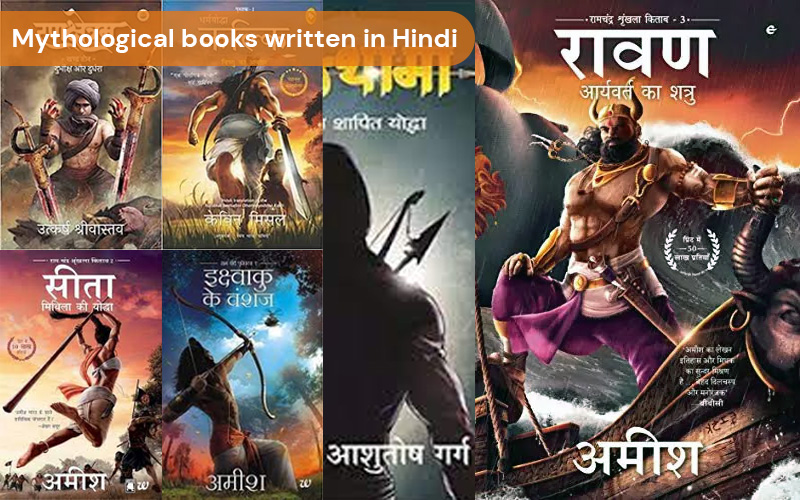
Mythological books written in Hindi
Diversity breathes at the nucleus of mythology, just as diversity reigns at the core of India. Stories flapped within stories, often overlapping one another, anecdotes of truth and morality, gracefully strung oral traditions and a rich culture: these bind the traditional mythology that flows through the heart of the country.Mythology has expanded everywhere. It appears in the popular screen and stage adaptations of moral tales and folklore. It has been omnipresent in both the social and structural architecture of India. For a few, they shape the bonds of nostalgic sentiment, setting a reminder of that warm summer afternoon when grandmothers only had stories in the baskets. It’s very much embedded in the way good and evil are viewed, the ideal man is portrayed, the perfect woman is centred. Our perceptions of our surroundings are driven by those lessons driven by different renditions of The Ramayana, it could easily be a Japanese anime featured on television.It is merely a wonder that Indian writers are falling deeply into the mythological fiction in Hindi. Mythological Hindi fiction is a much savoured genre that has awashed the Indian market for decades, through Amish Tripathi's esteemed trilogy to Devdutt Pattnaik's translated work. Even Shashi Tharoor authored an appraisal of the Mahabharata - The Great Indian Novel, written from the perspective of the Indian Independence Movement. Various renditions of Indian Mythology in Hindi today help in flashing light on a whirlwind of perspectives, such as the women, warriors, or demons in the stories. Mythological Hindi fiction has spread its wings through literal and translated works.Let’s look at some of the Hindi literary works on mythology.The Shiva Trilogy by Amish Tripathi (Hindi)The series that pushed Indian mythology into the forefront, Amish Tripathi's The Immortals of Meluha and the subsequent parts, find their mention on every book list discussing Indian mythological fiction in Hindi translation. Ever since these books were released almost a decade back, Amish has become the benchmark name in mythological fiction for book-enthusiasts. The storyline shadows one mythological character, Shiva, the warrior. It dives deep into good and evil, and how they are often obscured.Asura: Tale of the Vanquished by Anand NeelakantanWas Raavana really the fraudulent villain that he is depicted as or was there more to his frontal face? Anand Neelakantan finds the roots of this devious character from the Ramayana to yield a garden perspective. He humanises the so-called antagonist by letting them fall into the stage and tell the story. The narrator is Bhadra who explicates independently on Raavan's point of view, and his parallel responsibility as the young leader of the Asuras, a clan that was deteriorating.Arthala by Vivek KumarIf mythology is your ground for exploration, this is the tale which is written on the backdrop of bygone times where you can see devas, humans, asuras, and various tribes disputing their way of living, existence, beliefs and power. Vivek Kumar's writing is crisp and very imaginative on the canvas. His command of the Hindi language is enthralling, while his vocabulary is rich in taste. This book demands a translation in English and with expert marketing, it has all the components to hand in tough competition to some of the bestsellers in this genre.Beyond contemporary mythological books, Hindu mythology covers the body of myths and mythical literature espoused by the followers of the Hindu religion, discovered in Hindu texts such as the Vedic literature, epics like Mahabharata and Ramayana, the Puranas, and regional literature like the Tamil Periya Puranam and Divya Prabandham, and the Mangal Kavya of Bengal. Hindu myths are also alive in translated popular writings, like the fables of the Panchatantra and the Hitopadesha, as well as in Southeast Asian texts.
More details
How to Learn Hindi in the Fastest Possible Way
If you speak Arabic, English, or Persian, you will have a solid and immediate vantage point for adapting the learnings of Hindi. The Colloquial Hindi vocabulary consists of hundreds of regular loanwords. Loanwords are one way to stimulate your rudimentary vocabulary as a beginner. But some differences exist between Hindi and most Indo-European languages, and it’s not only the Hindi alphabet, known as Devanagari Script.The formal version of the language, referred mostly as ‘Pure Hindi’ are existent on the news, both TV and print, legal documents, and books. This is the form of Hindi used in most conventional Hindi lessons. And while the grammar is moderately the same as in spoken Hindi, the vocabulary derives itself from Sanskrit. This diversion in the language is essentially similar to the Arabic split. Modern Standard Arabic is considered as the academic language, while branched-out dialects are absorbed in conversations.Here is a list of how to learn Hindi in the fastest way possible.Become familiar with Devanagari ScriptDevanagari, an abugida alphabet of India and Nepal, is the primary script used in writing Hindi, Nepali and Marathi. The scripting moves from left to right, with deficiency in distinct letter cases, and is perceptible by a distinctive horizontal line running along the toppings of the letters connecting them together.Look deep into the Hindi vowels and consonantsHindi has 11 vowels, often specified by the use of diacritic marks, or symbols added to the letters of an alphabet, to emphasise on different pronunciations. Hindi Vowels have two forms: one form for when they are pronounced independently, and one form for when the vowel joins with a consonant in a word.Also, 33 consonants prevail in Hindi. They are sectioned in the alphabet as per the usage of the mouth and throat while pronouncing them. Hindi makes use of more consonants than English does, and some of them don't have any undeviating equivalent in English. The (a) sitting next to some consonants implies that the pronunciation would be in the line of aspirated (i.e., with a strong breath of air such as p in "pit" or "puff").Learn the process of writing the Hindi alphabetOnce something is laid out on paper, learning the Devanagari script would be a convenient means. With writing draws in the familiarity of Hindi nouns. Nouns are words for places, animals, objects, emotions, and humans. In Hindi language, all nouns possess a gender: feminine or masculine. The gender of Hindi nouns stands for coherent communication and grammar. So in your journey of learning Hindi nouns, you must learn the genders to use the nouns correctly.Purchase a Hindi dictionaryOxford Hindi-English Dictionary, Oxford University Press publishes the gold standard of dictionaries. Pocket dictionaries are handy if you need to look in on a word or two, but for a multiplied understanding, you must invest in a more wholesome academic dictionaryOnline lessons to build your skillsKnowledge shoots in from every direction. Explore the language forums, and websites, committed to teaching Hindi grammar. Go through YouTube videos, private online tutors, online language workshops, and private online tutors. Several front-row universities provide free online lessons. Find audio-and-video Hindi lessons so that your ears can adapt the sounds.Another daily routine can indulge in a good textbook. As soon as your familiarity builds with the basics of Hindi grammar and vocabulary, you'll require a more meticulous medium to master the more complicated elements of the language. You can find a textbook that contains audio elements as well.Moreover, read anything you can get your hands on in Hindi. As of today's date, there is a plethora of online resources available in Hindi, including blogs, newspapers, and social media. A long tradition of Hindi literature dates back to the 760s CE, full of philosophers, poets, and writers.
More details
Origin of Hindi Language
The Origin of the Hindi LanguageHindi language, parallel with the Indo-Aryan Languages, is believed to be a direct descendant of Sanskrit, through Prakrit and Apabhramsha. Being the fourth most-spoken language in the world and the National language of India, Hindi also holds the regionally-acquitted flow of the different languages of four countries like Suriname, Mauritius, Trinidad & Tobago, and Guyana. The origin of the term Hindi goes back to the inhabitants of the Indo-Gangetic Plain. It was derived from Classical Persian Hindī (Iranian Persian pronunciation: Hendi), conveying “of or belonging to Hind (India)”. That’s how India was born, carrying forward the ancient dilution of Sanskrit.Sanskrit - World’s Oldest Language All European languages happen to be inspired by Sanskrit, the world’s oldest language. Sanskrit has the laurel of the most ancient linguistic connector and the genesis of all the languages the world has in store. Sanskrit has been spoken since 5,000 years prior to the emergence of the Christ era.Hindi poured in from an early form of Vedic Sanskrit, through Sauraseni Prakrit and ŚauraseniApabhraṃśa (from Sanskrit apabhraṃśa “corrupt”), which surfaced in the 7th century CE. Based on prominent linguistic grounds, Vedic Sanskrit could travel back as far as 1500 BC. By the 10th century A.D., it became more stable. With the advent of Islamic administrative rule in Northern India, Hindi borrowed a handful of loanwords from Arabic, as well as Persian. Awadhi, Braj, and Khari Boli are some of the dialects of Hindi. As you read through the oldest remnants of Hindi literature, some of the hymns of the Hindu compilation that are known as the Rigveda, were scripted in Vedic Sanskrit. It was only around 800 BC that it was shaped into Classical Sanskrit. This language was the medium for the upper class, which persisted as the classical literary language in India for decades. Though the classical emblem of this sophisticated modulator is hardly spoken now, it is still taught in schools in the same way that Latin is coached as the classical literary language of Europe.PrakritPrakrit languages emerged from Vedic and Classical Sanskrit. The earliest is speculated to be around 500 BC; the latest could be around 800 AD. Linguists are in contradiction as to whether all Middle Indo-Aryan languages should be conglomerated under the umbrella term Prakrit; as it is, many of the Indo-European languages of India flowed from one or more of them.Some were Dramatic Prakrits, the languages spelled exclusively for plays and literature. They were not to be mixed with the colloquial vocabulary, and very often Sanskrit translations were subtitled so the reader could understand the context. With the course of living, as Sanskrit lost meaning and purpose in certain areas, some dramatic Prakrits transmitted to vernacular languages, such as Maharashtra Prakrit, the ancestor of the Marathi language.The Prakrit language that stood its firm ground was Ardhmagadhi Prakrit, and its grammar was more of a dedicated standard to teach other Prakrits. In regions where Hindi would soon sweep in, by any means, Sanskrit retained its place, so that the etymology of many Hindi wordings derives straight from Sanskrit rather than through a Prakrit language.The Future that was the Language HindiAround 500 AD the Apabhramsha dialects revolutionized from Prakrit In Northern India. They posed as a lingua franca until the 13th century AD. They were named Hindavi by the Persian rulers of the Delhi Sultanate who were in possession of large mounds of the larger India from 1206 to 1526. The Hindi languages started digressing from Apabramsha around the 11th century AD, most of them being distinct and diverse by the 12th. Interestingly, many regions still kept the conversations going in the Apabhramsha languages.It was under the realm of the Delhi Sultanate that the Persian language first got stirred with the local Apabhramsha dialects to morph into what would later formulate into the Hindi and Urdu languages.In the year 1526, the Moghul Empire, the commanding empire of Turko-Mongol descent, superseded the Delhi Sultanate and possessed much of India, making broad ways for even more Persian loanwords to influence the language.Time flowed. The Moghul Empire slowly dissipated in the 18th century, Khari Boli or Khariboli vernacular, successor dialects to the Apabhramsha languages, had supplanted Persian as the daily language. Consequently, the variant of Khariboli of the upper class in northern India pitched the flag as Hindustani.Either way, as we eye once again the antiquity of Hindi, learning Hindi still rekindles a literary past and an assured future.
More details
Write a public review